Core Program
Exploring New Academic Configurations in Response to Transforming Social Issues
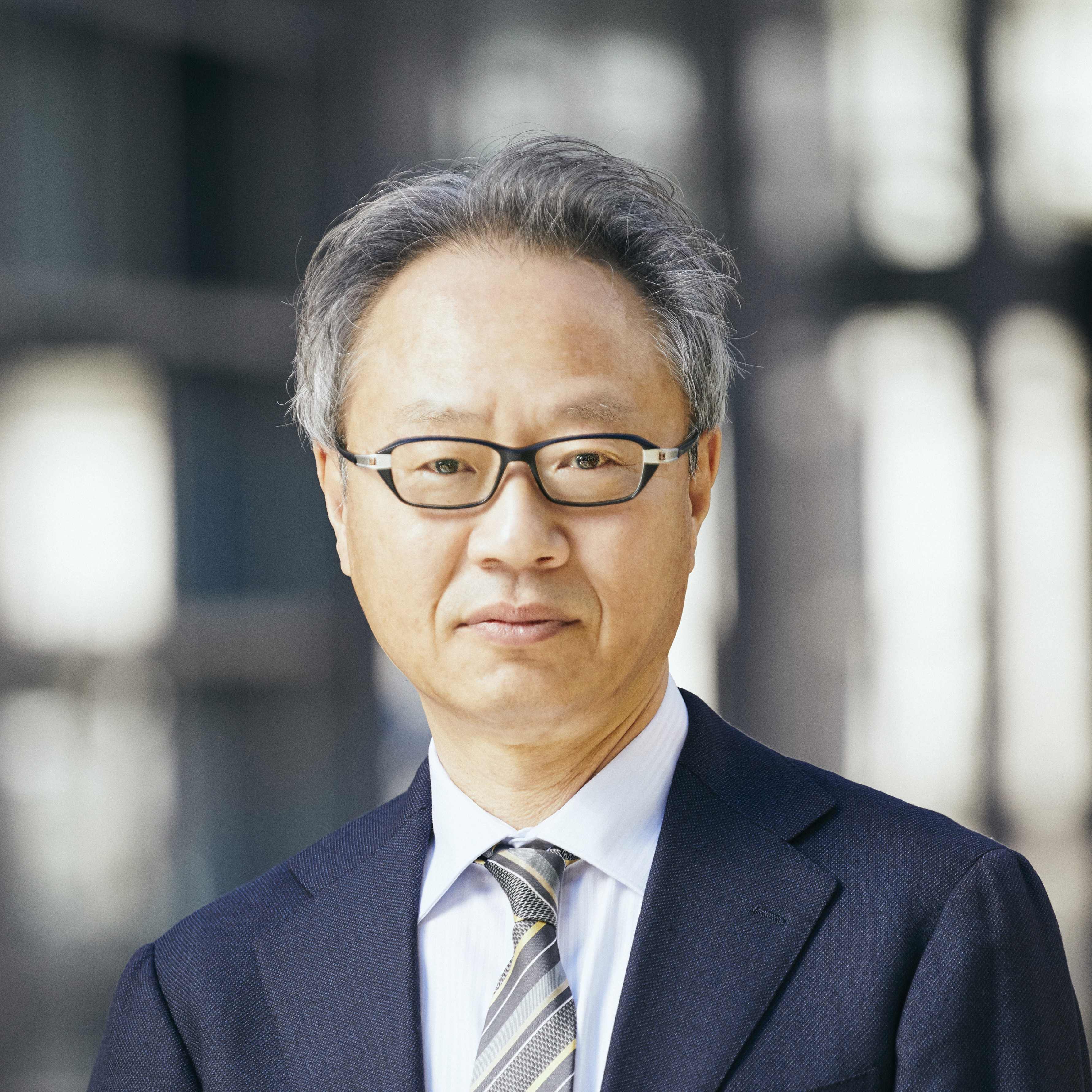
- Research Representative: KOBAYASHI Tadashi
- Vice Director, IIAS, Professor Emeritus, The University of Osaka
This research investigates the background of ELSI (Ethical, Legal, and Social Issues) and RRI (Responsible Research and Innovation)—fields that have gained significant attention and are now being implemented in Japan—to explore the transformation and future of academia.
Since the beginning of the 21st century, academia has shifted from a traditional focus on the "pursuit of truth" toward a greater emphasis on "solving social challenges" and "contributing to innovation." ELSI and RRI are positioned within this trend. The increasing demand for scientific advice on social and policy issues, along with the expansion of public investment based on the concept known as “results-based approach,” reflects a growing interest in the "utility" of scholarship. We will examine the background of these transitions, considering the balance with the traditional pursuit of truth, and explore the desirable future direction of academia.
In that case, it is important to note that the nature of the challenges modern society seeks to solve through the “utility” of scholarship is changing; these challenges are now referred to as VUCA (Volatility, Uncertainty, Complexity, Ambiguity), "Complex and Difficult Cases," "Systemic Risk," and "Wicked Problems."
Furthermore, the academic world is also undergoing new developments, such as the emergent technologies that have emerged since the late 20th century and “Data-Driven Science” also known as the fourth paradigm.
By providing a bird's-eye view of the transformation of social challenges, changes in the objectives of scholarship, and the emergence of new academic fields, we aim to create a comprehensive map of knowledge—a modern "Encyclopédie."
This research will be conducted by multiple research groups composed of external experts, with coordination led by the Vice Director. The candidate research groups are as follows:
1) Science for Safety in the Era of Empirical Difficulty (Prof. Shin-etsu Sugawara Project)
Previously, at the International Institute for Advanced Studies (IIAS), a comprehensive and interdisciplinary project aimed at establishing "Science for Safety" was conducted under the leadership of Yoichiro Murakami. This research addressed safety issues across "Life and Medicine," "Urban Environments," and "International Politics," seeking to build the foundation of "Science for Safety" from a meta-perspective. Since then, however, the world—including Japan—has experienced various accidents and natural disasters, leading to global advancements in risk theory, safety studies, and the philosophy of technology. Building on this accumulation of knowledge, this project seeks to develop a contemporary evolution of "Science for Safety."
We will explore how to ensure safety in “cases where direct experimentation or observation is difficult.” Furthermore, we address the challenge of how to make societal decisions regarding such cases based on “scientific knowledge” (the formation of socio-technical confidence).
Senior Research Fellow
SUGAWARA Shin-etsu Professor, Kansai University(Research Representative)
Research Members
ITO Daisuke Professor, Kansai University
OKAMOTO Makiko Professor, Kansai University
KOBAYASHI Taishi Associate Professor, Kyoto University
JURAKU Kohta Professor, Tokyo Denki University
MATSUMURA Kazushi Associate Professor, The University of Osaka
Specially Appointed Researcher
KOBAYASHI Masamichi Ph.D. student, Kansai University
2) The Use and Misuse of the "Past" (Prof. Nobuya Hashimoto Project)
Countries, local communities, and individuals all have narratives that tell their own stories of origin. These are, as it were, accounts of the “past,” but unlike the empirically verifiable “facts” assumed by historiography, they often involve embellishment, downplaying, revision, and distortion—and may even include complete fabrications or falsifications. It is, in a sense, a “misuse” of the past.
Stories of this kind serve as the foundation for the identities of nations, local communities, and individuals; at the same time, however, they can give rise to hostility among different individuals, groups, and nations, leading to conflict. Many of the conflicts currently occurring around the world can be described as clashes of such past memories.
To fully understand the issues of “use” and “misuse” in the past, it is also necessary to examine them from a broader perspective—that of the meaning of “the past” in the various activities carried out by humans who possess a sense of time.
Therefore, the purpose of this research is to synthesize insights from various disciplines—including not only history and archaeology but also oral history, psychology, philosophy, religious studies, mythology, and natural history—to elucidate how the past has been treated and the conditions under which this treatment sometimes leads to what is referred to as “misuse.”
Senior Research Fellow
HASHIMOTO Nobuya Professor, Kwansei Gakuin University(Research Representative)
Research Members
IIJIMA Wataru Professor, Nagasaki University / Director, Museum of Tropical Medicine, Nagasaki University
ODANAKA Naoki Vice President and Professor, Tohoku University
KINOSHITA Takashi Professor, Kobe University
KUBO Akihiro Professor, Kwansei Gakuin University
KUBOTA Sachiko President, Ashiya University / Professor Emeritus, Kobe University
TSURUMI Taro Associate Professor, The University of Tokyo
PARK Sara Associate Professor, Kyoto University
YANAGISAWA Tami Associate Professor, Kwansei Gakuin University
MembersAs of Apr 01, 2026
| KOBAYASHI Tadashi | Vice Director, IIAS, Professor Emeritus, The University of Osaka |
|---|---|