Core Program
Mathematical Sciences Beyond Borders
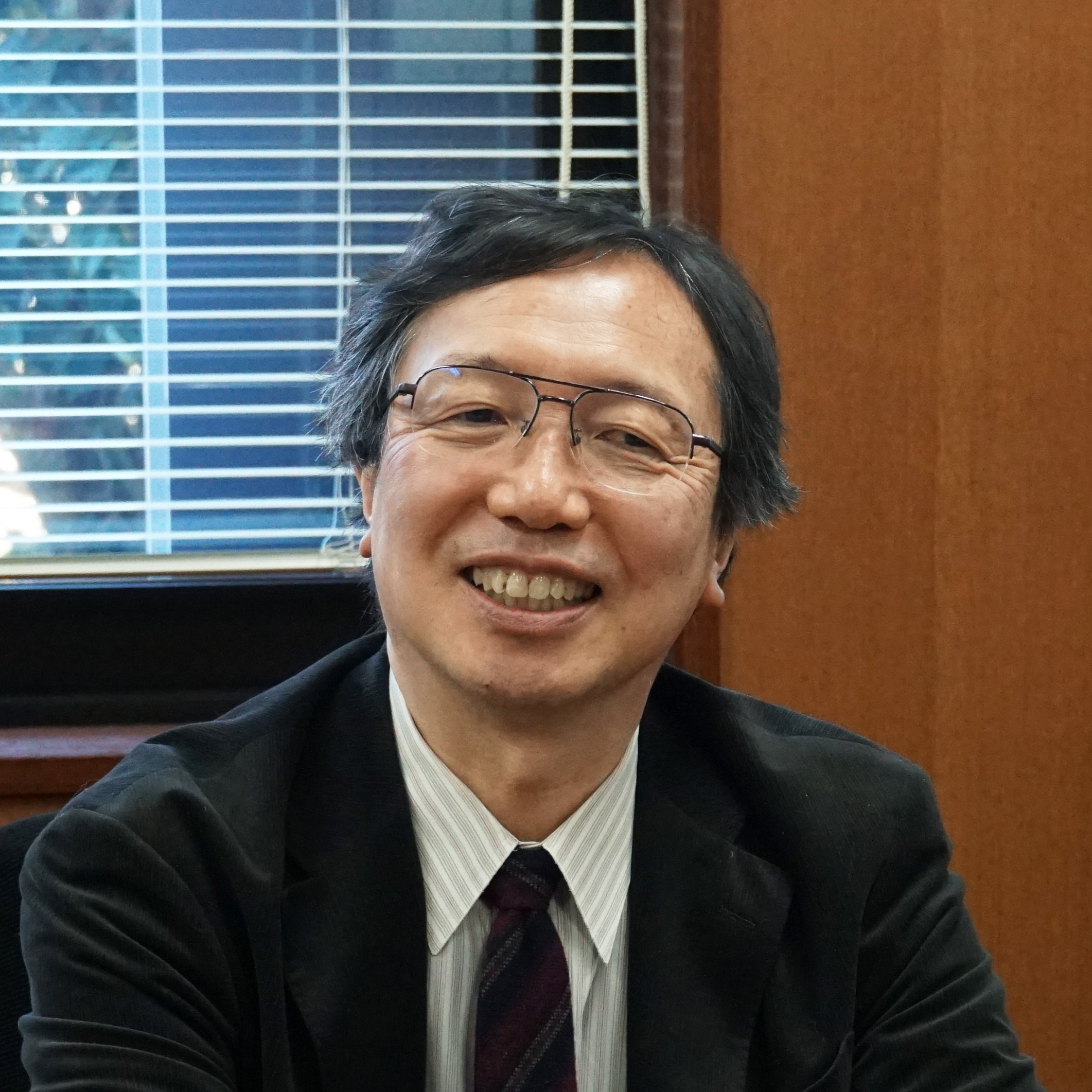
- Research Representative: YAMADA Michio
- Vice Director, IIAs, Project Professor, RIMS, Kyoto University
Professor Emeritus, The University of Tokyo/Kyoto University
This research explores the deepening of mathematical sciences, which form the foundation of various disciplines, and their collaboration with diverse academic fields. The fundamental philosophy of the International Institute for Advanced Studies (IIAS)—"Uncovering what must be studied for the future and happiness of humanity"—refers to the act of stepping into territories where only "beast trails" (unbeaten paths) exist. It expresses the high expectations for experimental and adventurous research in these frontier fields, which are often difficult to conduct within existing research institutions. In accordance with this philosophy, this study aims to deepen mathematical methods in STEM fields such as mathematics, biology, and informatics. Furthermore, it seeks various mathematical approaches to humanities fields where such research has traditionally been scarce—such as literature, history, archaeology, and geography—thereby expanding the academic horizon of mathematical sciences into these unexplored territories.
Fiscal year 2026 will be a phase for assessing the current status and exchanging information through joint discussions among researchers challenging mathematical approaches in frontier fields, with the goal of developing new mathematical methodologies. Specifically, we plan to hold research meetings in the following fields and organize public lectures to introduce the cutting edge of research to the general public.
1) Transformation of Academia Crossing the Boundaries Between Humanities and Sciences
①Mathematical geographical modelling
We will explore mathematical approaches to fields in the humanities, such as history, geography, and literature.
Senior Research Fellow
AOKI Takaaki Professor, Shiga University
②AI and the Science of Science
In light of the significant impact AI is having on academia across all disciplines, we will discuss the future of scholarship and research.
Senior Research Fellow
FUJIWARA Naoya Professor, Tohoku University
AOKI Takaaki Professor, Shiga University
③Generative Science
In collaboration with “Institute of Generative Science,” Kyoto University, we will discuss the evolution of academia and science in the age of AI from diverse perspectives, including physics, mathematics, computer science, philosophy, literature, and law.
Senior Research Fellow
HASHIMOTO Koji Professor, Kyoto University
2)Mathematical Approach to Environmental History
①Hydrological Climatology of Monsoon Asia
Using specific examples from monsoon regions of Asia, such as Bangladesh and the Kizugawa River basin, we will adopt an environmental history approach based on mathematical models and field data.
Senior Research Fellow
TERAO Toru Professor, Kagawa University
MURAYAMA Satoshi Professor Emeritus, Kagawa University
Co-Convener, International Consortium for Earth and Development Sciences,
Kagawa University
3)Mathematical Conditions for Life
①Algorithms of Life
We aim to elucidate the mechanisms underlying biological phenomena, such as the movement of organisms, using theoretical and numerical methods.
Senior Research Fellow
ISHIMOTO Kenta Professor, Kyoto University
②Habitable Planets
We will discuss the surface environments of exoplanets from both theoretical and observational perspectives, with a focus on habitable environments (the habitable zone).
Senior Research Fellow
ISHIWATARI Masaki Professor, Hokkaido University
HAYASHI Yoshiyuki Academic Fellow and Professor Emeritus, Kobe University
4)Research in Mathematical Methods and Pure Mathematics
①Phenomena and Mathematics
We use mathematical approaches to uncover the mechanisms underlying the complex phenomena that occur in nature and society.
Senior Research Fellow
KOBAYASHI Miki Professor, Rissho University
ISHIMOTO Kenta Professor, Kyoto University
OBUSE Kiori Professor, Okayama University
②Representation Theory
We will hold research conferences in the field of Representation Theory in pure mathematics.
Senior Research Fellow
KOBAYASHI Toshiyuki Professor, The University of Tokyo
③Symplectic geometry
We will hold research conferences on Symplectic geometry, a branch of geometry.
Senior Research Fellow
ONO Kaoru Professor, RIMS, Kyoto University
④New Developments in Mathematical Fluid Dynamics: Information, Causality, and Spontaneous Probability
We will address nonlinear problems found in fluid dynamics (stability, turbulence, and mixing) and information science (machine learning, data assimilation, and random number generation), as well as the application of information science methods to fluid dynamics.
Senior Research Fellow
INUBUSHI Masanobu Associate Professor, Tokyo University of Science
MembersAs of Apr 01, 2026
| YAMADA Michio | Vice Director, IIAs, Project Professor, RIMS, Kyoto University Professor Emeritus, The University of Tokyo/Kyoto University |
|---|---|